Electric vehicle incentives & rebates in Oregon
3 state or local incentives for drivers, 1 charging incentive, 8 utilities with residential EV programs — plus EV fees, HOV rules, public charging and the cost to charge in Oregon. Every program links to its official page and the U.S. Department of Energy AFDC entry.
Updated November 2026 · AFDC data retrieved November 6, 2026
Oregon EV rebates, tax credits and perks
Electric Vehicle (EV) Rebate
CurrentState IncentivesThe Charge Ahead Rebate Program offers low- and medium-income Oregon residents a rebate of up to $5,000 for new or pre-owned EVs purchased between May 22, 2025, and December 4, 2025, including plug-in hybrid electric vehicles. Residents who purchased a new EV may combine this rebate with the Clean Vehicle Rebate to receive a maximum rebate of $7,500. Qualifying residents are considered households with income levels that do not exceed 400% of the federal poverty line. For more information, including funding availability, see the Charge Ahead Rebate Program and Go Electric Oregon websites. (Reference Oregon Revised Statutes 468.442 and 468.446)
Official program page: Charge Ahead Rebate Program · AFDC entry · enacted June 10, 2021 · AFDC updated July 13, 2021
Plug-In Hybrid Electric Vehicle (PHEV) and Zero Emission Vehicle Rebates
CurrentState IncentivesThe Clean Vehicle Rebate Program provides rebates to Oregon residents, businesses, non-profit organizations, and government agencies for the purchase or lease of a new electric vehicle (EV), including a PHEV, electric motorcycle, or fuel cell electric vehicle (FCEV). EVs and FCEVs purchased between May 22, 2025, and September 8, 2025, with a battery capacity greater than 10 kilowatt-hours (kWh), are eligible for a rebate of $2,500. EVs and FCEVs with a battery capacity of less than 10 kWh are eligible for a rebate of $1,500. Electric motorcycles are eligible for a rebate of $750.
Official program page: Clean Vehicle Rebate Program · AFDC entry · amended June 10, 2021 · AFDC updated July 13, 2021
Pollution Control Equipment Exemption
CurrentState IncentivesDedicated original equipment manufacturer natural gas vehicles and all-electric vehicles are not required to be equipped with a certified pollution control system. (Reference Oregon Revised Statutes 815.300)
AFDC entry · enacted January 1, 2001
Oregon home and community charging incentives
Electric Vehicle (EV) Charger Rebates
CurrentState IncentivesThe Oregon Department of Transportation (ODOT) offers a rebate for the purchase and installation of qualifying EV chargers to businesses; multifamily housing (MFH); and state, local, and tribal government entities for the purchase and installation of qualifying EV chargers. Rebates amounts are $8,000 per level 2 charger or up to 80% of project costs. Seventy percent of the project funds are reserved for projects located within rural or disadvantaged communities. Rebates are awarded on a first-come, first-served basis.
Official program page: Community Charging Rebates Program · AFDC entry · enacted February 1, 2024 · AFDC updated June 5, 2024
Oregon utility EV programs
8 utilities list residential EV programs; 2 offer an EV or time-of-use rate and 5 charger incentives
| Utility | Type | Residential EV programs | Business / fleet programs | Links |
|---|---|---|---|---|
| Central Lincoln | cooperative | 🔌 EV Level 2 Charging Station Installation Rebate | 🔌 EV Level 2 Charging Station Installation Rebate | Utility EV page AFDC |
| City of Forest Grove Light & Power | municipal utility | 🔌 EV Level 2 Charging Station Purchase Rebate 🔌 EV Level 2 Charging Station Installation Rebate | 🔌 EV Level 2 Charging Station Purchase Rebate 🔌 EV Level 2 Charging Station Installation Rebate | Utility EV page AFDC |
| Clatskanie PUD | municipal utility | 🔌 EV Level 2 Charging Station Purchase Rebate 🔌 EV Level 2 Charging Station Installation Rebate | — | Utility EV page AFDC |
| Consumers Power Inc. (CPI) | cooperative | 🔌 EV Level 2 Charging Station Purchase Rebate 🔌 EV Level 2 Charging Station Installation Rebate | — | Utility EV page AFDC |
| Eugene Water & Electric Board (EWEB) | municipal utility | 🔌 EV Level 2 Charging Station Installation Rebate | 🔌 EV Level 2 Charging Station Installation Rebate 🔌 EV Direct Current (DC) Fast Charging Station Installation Rebate | Utility EV page AFDC |
| Pacific Power | investor-owned utility (IOU) | ⚡ EV Time-of-Use (TOU) Rate | ⚡ EV Time-of-Use (TOU) Rate | Utility EV page AFDC |
| Pacific Propane Gas Association (PPGA) | — | 🚗 New Propane Vehicle Rebate 🚗 Propane Vehicle Conversion Rebate | — | Utility EV page AFDC |
| Portland General Electric (PGE) | investor-owned utility (IOU) | ⚡ EV Time-of-Use (TOU) Rate | 🔌 EV Level 2 Charging Station Purchase Rebate 🔌 EV Level 2 Charging Station Installation Rebate 🚗 Fleet Electrification Assessment | Utility EV page AFDC |
⚡ rates and fuel pricing · 🔌 charging equipment and installation · 🚗 vehicle rebates. AFDC lists program types; amounts, eligibility and waitlists are on the utility's own page — follow the link and confirm the program is open before you buy.
Oregon EV registration fees, HOV and toll rules
EV fees
Electric Vehicle (EV) and Vehicle Efficiency Fees
CurrentLaws and RegulationsAll-electric vehicle owners must pay an annual fee of $115 or a per-mile road use fee of $0.02 per mile through the OReGo program. Hybrid electric vehicles and plug-in hybrid electric vehicles must pay an annual fee in the following amounts: Vehicle Efficiency Annual Fee ------------------------------------------------------- ------------ Vehicles with a rating of 0-19 miles per gallon (mpg) $20 Vehicles with a rating of 20-39 mpg $25 Vehicles with a rating of 40 mpg or greater $35 These fees are in addition to standard registration fees.
Official program page: OReGo program · AFDC entry · enacted August 18, 2017 · AFDC updated November 12, 2019
HOV and toll lanes
No current HOV-lane or toll exemption for EVs listed for Oregon.
Oregon laws that affect EV owners
6 law or regulations (right-to-charge, multifamily charging, parking, inspections and more)
Alternative Fuel Vehicle (AFV) Parking Space Regulation
CurrentLaws and RegulationsAn individual is not allowed to park a motor vehicle within any parking space specifically designated for public parking and fueling of AFVs unless the motor vehicle is an AFV. Eligible AFVs must also be in the process of fueling or charging to park in the space. A person found responsible for a violation is subject to traffic violation penalties. (Reference Oregon Revised Statutes 811.587)
AFDC entry · enacted June 2, 2015 · AFDC updated October 12, 2015
Electric Vehicle (EV) Charger Building Standards for New Construction
CurrentLaws and RegulationsTwenty percent of parking spaces at all newly constructed commercial buildings, multifamily residences with five or more units, and mixed-use developments must have the electrical capacity to support Level 2 EV chargers. New residential construction must be able to support the installation of one Level 2 EV chargers. (Reference Oregon Revised Statutes 455.417)
AFDC entry · amended September 25, 2021 · AFDC updated October 11, 2021
Electric Vehicle (EV) Charger Policies for Rental Properties
CurrentLaws and RegulationsThe owner of a lot in a planned community or unit in a condominium may apply to install EV chargers for their personal use in a parking space subject to the exclusive use of the owner. The homeowners association (HOA) must approve a complete application within 60 days. The owner is responsible for all costs associated with the EV charger installation and use, must disclose the existence of the EV charger and related responsibilities to a prospective buyer, and must ensure that the infrastructure meets insurance and safety requirements.
AFDC entry · enacted June 20, 2017 · AFDC updated October 10, 2017
Electric Vehicle (EV) Charging in Planned Communities and Condominiums
CurrentLaws and RegulationsThe owner of a lot in a planned community or a unit in a condominium may install an EV charging station for personal use in parking space subject to the owner's exclusive use. Homeowners associations (HOA) must approve a complete application within 60 days or provide a written statement of reasonable conditions within that period. Owners are responsible for all costs associated with installation, operation, maintenance, and removal of the EV charging station.
AFDC entry · amended June 4, 2015
Electric Vehicle (EV) Charging Station Policies for Associations
CurrentLaws and RegulationsThe owner of a lot in a planned community or unit in a condominium may apply to install EV charging stations for their personal use in a parking space subject to the exclusive use of the owner. The homeowners association (HOA) must approve a complete application within 60 days. The owner is responsible for all costs associated with the EV charging station installation and use, must disclose the existence of the EV charging station and related responsibilities to a prospective buyer, and must ensure that the infrastructure meets insurance and safety requirements.
AFDC entry · amended June 4, 2015 · AFDC updated October 12, 2015
Voluntary Road Usage Charge Program
CurrentLaws and RegulationsOregon's voluntary per mile road usage charge (RUC) program allows eligible passenger vehicles to pay a metered per mile charge set at five percent of the per gallon license tax instead of relying solely on fuel taxes. Applicants must equip a selected mileage collection method, with ODOT providing multiple options (including at least one non location method) with open system standards, security, tamper resistance, auditability, and privacy protections. EVs and vehicles rated 40+ mpg that enroll are exempt from additional registration fees.
Official program page: OReGO: Oregon’s Road Usage Charge Program · AFDC entry · enacted August 14, 2013
Oregon programs for businesses, fleets and public agencies
5 programs
Alternative Fuel Loans
CurrentState IncentivesThe Oregon Department of Energy administers the Small-Scale Local Energy Loan Program which offers low-interest loans for qualifying projects. Eligible alternative fuel projects include fuel production facilities, dedicated feedstock production, fueling infrastructure, and fleet vehicles. Loan recipients must complete a loan application and pay a loan application fee. For more information, see the Energy Loan Program website. (Reference Oregon Revised Statutes 470.060 through 470.080)
Official program page: Energy Loan Program · AFDC entry · amended August 5, 2011
Clean School Bus Grants
CurrentState IncentivesThe Oregon Department of Environmental Quality must use funds awarded to Oregon through the Volkswagen (VW) Environmental Mitigation Trust and deposited in the Clean Diesel Engine Fund, to award grants to owners and operators of at least 450 school buses powered by diesel engines. Eligible vehicles include buses that have at least three years of remaining useful life. Grants will be available for 30%, up to $50,000, for the purchase of a new bus or up to 100% of the cost to retrofit a school bus with emissions-reducing parts or technology that reduce diesel particulate matter emissions by at least 85%.
Official program page: Volkswagen (VW) Environmental Mitigation Trust · AFDC entry · enacted August 16, 2017 · AFDC updated December 20, 2019
Community Electric Vehicle (EV) Charger Grant
CurrentState IncentivesThe Oregon Department of Energy (ODOE) administers the Community Renewable Energy Grant Program, which offers grants to tribal entities, local governments, port and irrigation districts, and consumer-owned utilities to plan and develop community renewable energy and energy resilience projects. Eligible projects include publicly accessible EV chargers. Grant amounts vary and may cover up to 100% of total project costs. Half of program funds must be awarded to low-income, underserved, or rural communities. Grants are awarded on a competitive basis. For more information, see the ODOE Community Renewable Energy Grant Program website.
Official program page: Community Renewable Energy Grant · AFDC entry · AFDC updated March 8, 2023
Oregon's National Electric Vehicle Infrastructure (NEVI) Planning
CurrentState IncentivesThe U.S. Department of Transportation's (DOT) NEVI Formula Program required the Oregon Department of Transportation (ODOT) to submit an annually updated EV Infrastructure Deployment Plan (Plan) for fiscal years 2022 through 2026 to their FHWA Division Office, describing how the state intended to distribute NEVI funds and their physical and cybersecurity strategies, and including a Community Engagement Outcomes Report. The submitted plans must address updated NEVI Guidance. For more information about Oregon's NEVI planning process, see the ODOT Oregon's Five-year EV Charging Infrastructure Roadmap website.
Official program page: NEVI Guidance · AFDC entry · AFDC updated September 14, 2022
Zero-Emission Fueling Infrastructure Grants
CurrentState IncentivesThe Oregon Department of Environmental Quality (DEQ) administers the Zero-Emission Fueling Infrastructure Grant Program to support the development of charging and fueling infrastructure for medium- and heavy-duty zero-emission vehicles. Eligible applicants include public agencies, businesses, and Tribal governments. Grants reimburse a portion of eligible project costs for the design and installation of direct-current fast chargers and Level 2 chargers. Priority is given to projects in locations disproportionately affected by poor air quality. For more information, see the DEQ Zero-Emission Fueling Infrastructure Grant Program website.
Official program page: Zero-Emission Fueling Infrastructure Grant Program · AFDC entry · enacted June 3, 2022
Public EV charging stations in Oregon
1,673 stations · 2,964 Level 2 ports · 1,368 DC fast ports
| City | Stations | DC fast ports |
|---|---|---|
| Portland | 263 | 134 |
| Salem | 125 | 49 |
| Hillsboro | 93 | 17 |
| Eugene | 84 | 40 |
| Bend | 63 | 37 |
| Beaverton | 48 | 60 |
| Oregon City | 42 | 0 |
| Lake Oswego | 35 | 10 |
| Milwaukie | 32 | 4 |
| Corvallis | 31 | 5 |
| Medford | 31 | 53 |
| Ashland | 31 | 29 |
| Tigard | 30 | 33 |
| Newberg | 30 | 7 |
| Woodburn | 26 | 20 |
| Gresham | 23 | 8 |
| Roseburg | 22 | 7 |
| Klamath Falls | 22 | 40 |
| Hood River | 18 | 32 |
| Troutdale | 18 | 11 |
| Network | Stations |
|---|---|
| ChargePoint | 765 |
| OpConnect | 215 |
| Blink | 203 |
| Non-networked | 96 |
| Tesla Destination | 89 |
| Tesla Supercharger | 66 |
| EVCS | 46 |
| Electrify America | 34 |
| FLO | 32 |
| EV Connect | 15 |
| EVgo | 12 |
| Rivian Adventure Network | 12 |
Connectors: J1772 at 1,302 stations, CCS at 272, NACS/Tesla at 197, CHAdeMO at 179.
Cost to charge an EV at home in Oregon
About $5.72 per 100 miles at 15.46¢/kWh
Defaults: 12,000 miles a year and 30 MPG are examples — enter your own. Energy only (no maintenance, insurance or depreciation). Efficiency is the EPA combined kWh/100 mi rating (window sticker); real-world use varies with speed, weather and charging.
Electric cars for sale in Oregon
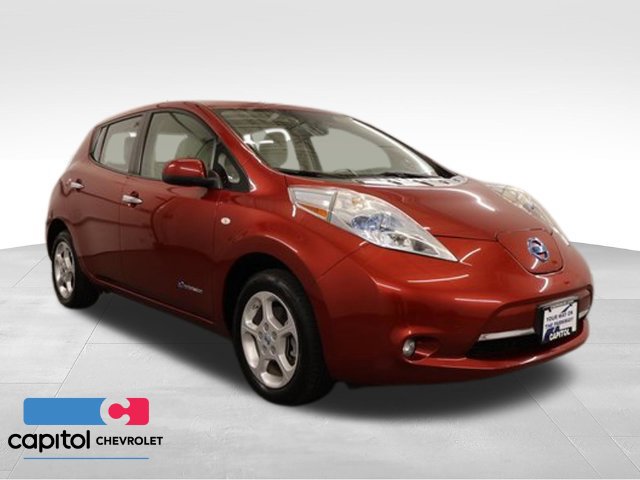
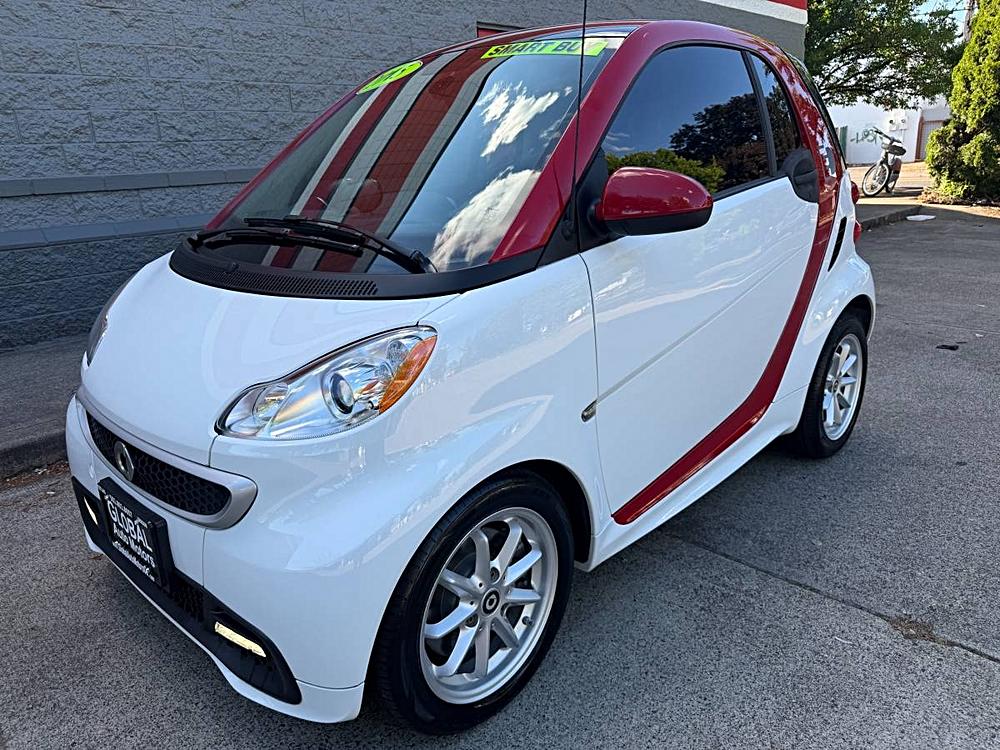
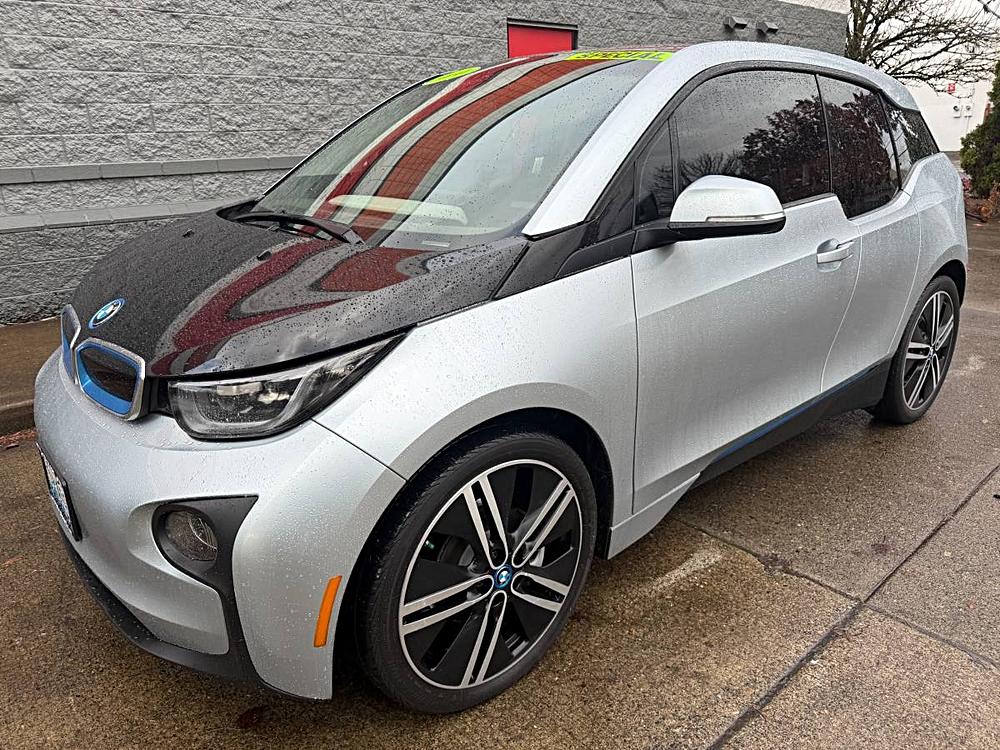
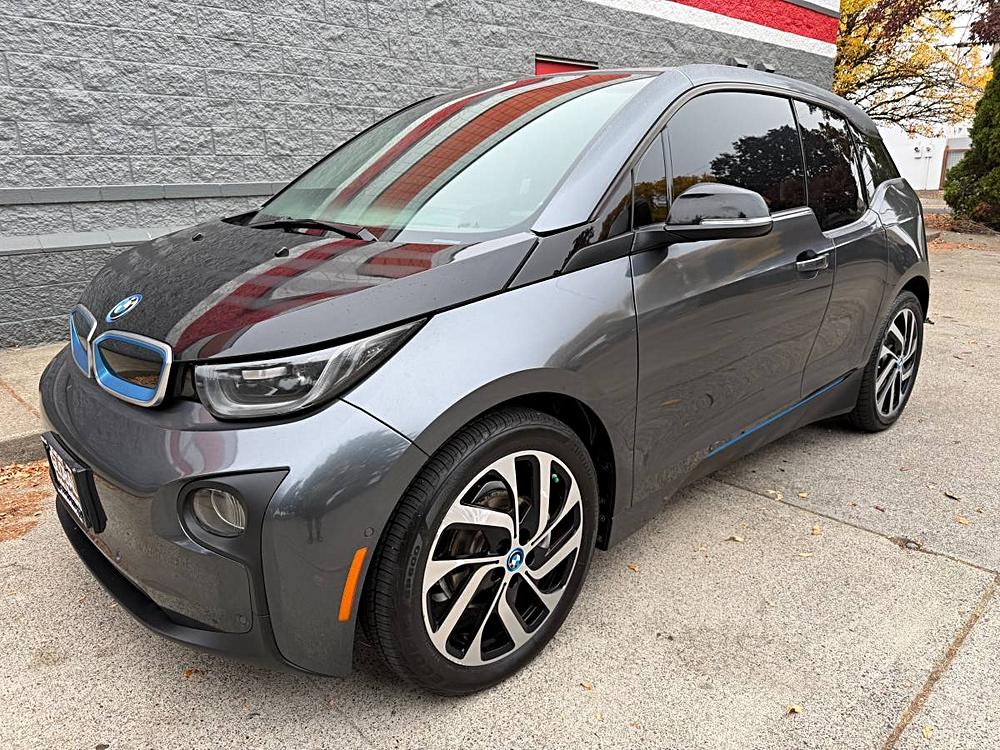
216 EVs and 49 plug-in hybrids · 3.4% of Oregon listings · median EV asking $40,982





Frequently asked questions
- Are there EV rebates or tax credits in Oregon?
- Yes. The U.S. Department of Energy lists 3 state or local incentives for drivers, 1 charging incentive, 8 utilities with residential EV programs in Oregon (as of November 6, 2026): Electric Vehicle (EV) Rebate; Plug-In Hybrid Electric Vehicle (PHEV) and Zero Emission Vehicle Rebates; Pollution Control Equipment Exemption; Electric Vehicle (EV) Charger Rebates. Funding and eligibility change, so check each official program page.
- Is there still a federal EV tax credit in Oregon?
- No. The federal new and used clean vehicle credits are not available for vehicles acquired after September 30, 2025 (IRS), and the home charger credit (30C) ended for equipment placed in service after June 30, 2026.
- Does Oregon charge an EV registration fee?
- Yes — Electric Vehicle (EV) and Vehicle Efficiency Fees: All-electric vehicle owners must pay an annual fee of $115 or a per-mile road use fee of $0.02 per mile through the OReGo program. Hybrid electric vehicles and plug-in hybrid electric vehicles must pay an annual fee in t (AFDC, as of November 6, 2026).
- Can EVs use HOV lanes in Oregon?
- AFDC lists no current HOV-lane exemption for EVs in Oregon.
- How many public EV charging stations are in Oregon?
- 1,673 open public charging stations with 2,964 Level 2 and 1,368 DC fast charging ports, per the U.S. Department of Energy station locator (November 6, 2026).
- How much does it cost to charge an EV at home in Oregon?
- At Oregon's average residential electricity price of 15.46¢ per kWh (EIA, Year-to-Date through August 2026), about $5.72 per 100 miles for an EV using 37 kWh/100 mi. Regular gasoline averaged $4.77/gal (West Coast less California, EIA week of November 2, 2026).
- How many electric cars are for sale in Oregon on AutosXchange?
- 216 EVs and 49 plug-in hybrids from Oregon dealers, 3.4% of listings in the state; median EV asking price $40,982.
AutosXchange market data is calculated from the asking prices of current dealer listings on AutosXchange, refreshed as dealers update their inventory. These are not sold or transaction prices and not appraisals. Listings with an asking price under $500 (placeholder prices) are excluded. Confirm price, fees and availability with the selling dealer.